Indice libri
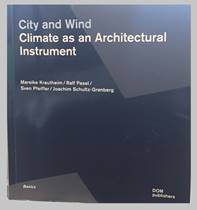
Argomento e tematiche affrontate
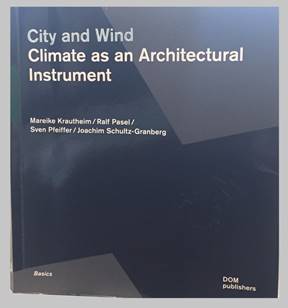
All throughout this book, the themes being discussed revolve around an increasingly crucial issue in modern architecture, sustainability. Thus, the attempts to estimate the value wind has on planning and how this natural resource can be exploited in an active manner.
Giudizio complessivo
Giudizio Complessivo: 8 (scala 1-10)
Autori

Mareike Krautheim
Mareike Krautheim is an architect and researcher. She has worked in several International offices in Hamburg, Copenhagen and Rotterdam. As Visiting Professor she is affiliated to the Rotterdam Academy of Architecture and Urba Design and the Utrecht Graduate School of Visual Art and Design. Her main field of work addresses design project and spatial processes that operate at the interface between archtecture and research in the context of global transitions. Her latest research focuses on climate generated urbanism and design strategies relating to climatological parameters.
Ralf Pasel
Ralf Pasel is professor for architecture at the Technical University Berlin. He has taught extensively at various Universities world-wide, most importantly at the Academy of Architecture and Urban Design Rotterdam, the Utrecht Graduate School of Visual Art and Design, TU Delft, TU Dresden and the Universidad Catolica de Santiago de Chile. He and his team work on International project, addressing all levels of scales, from research to architecture, from urbanism to exhibition design. In 2009 he was curator of the “Parallel Cases” exhibition of the 4th International ArchitectureBiennale Rotterdam.

Sven Pfeiffer
Sven Pfeiffer is professor at the Departement for Digital Design and Construction at the msa | munster school of architecture. In his teaching and research he explores the emergent interdisciplinary interaction between architecture and computation with a focus on integrated workflows between design, simulation and numerically controlled fabrication. Sven Pfeiffer studied architecture at the Univrsity of Applied Sciences in Hamburg, the University of Miami and graduated from the Staedelschule Frankfurt’s Architecure Class in 2001. Sven has collaborated with architects and artists on projects in scales that range from urban masterplans to furniture design and has lectured and taught at several schools in Europe. In 2010 ha fonde SPARC, an architectural research and studio which applies computational design and fabrication strategies in architectural and artistic contexts.

Joachim Schultz-Granberg
Contenuto
It is divided in 3 maind parts, the first covers several different factors regarding the concept of ‘wind’ in different fields of action, such as sociology, mythology, and culture. The second part develops a method of inclusion of ‘wind’ as an active part in architecture, and city planning; third and final part presents a wider scenario of academic papers regarding the matter.
Capitoli
Capitolo 0– Introduction
The author firstly introduces the concept of architecture as being direct opponent to both time and weather, and thus being shelter to rain, wind, and drought. At the same time, however, it gives a different approach to the situation, architecture is in fact seen as an element to best exploit and use the climate conditions of a location to create complex, and original structures.
To value his argument, the author, gives examples of how architecture has been able to adapt to different places, such as the characteristic rooftops in the alpine area.
Capitolo I – Experiencing the Invisible
This first chapter starts by analysing the effects that, hot weather, humidity, wind, and radiations from the sun, have on humans and thus, their ability to adapt and to create situations of comfort, of protection, and of limited control over the weather. Particular attention has been given to wind, which sensation depends on its intensity combined with air temperature and humidity: wind can in fact be experienced by us through all 5 senses; according to its intensity, speed, and exogenous temperature, different sensations can be experienced. A gradient of intensity, from 0 up to 12, renders the effect wind has on both humans and on the territory.
Wind can also be analysed as an instrument in the field of art applied to architecture, and how its sturdiness can resist to it.
Furthermore, an historical analysis is made, covering the ‘Golden Age’ the Dutch people had with regard to the maritime transfer of goods. This factor has in fact had a gigantic impact on the economic development of the Dutch population, and its ability to exploit the advantageous morphology of their territory, able to create massive amount of wind, resulting in an energy source and the development of the necessary technology.
As a consequence, to exploit the wind force as an architectural instrument is necessary the basic know-how, how this is related to a structure and how different shapes are influenced. Through the current study of wind is in fact possible to know wind direction and intensity, when it comes to planning.
In more extreme cases of high intensity wind, there is a uncomfortable habitat for humans, and the immediate solution is to make wind protection as a part of the landscape which will take different shape and characteristic due to the geographical location of the site.
The utility, all these studies have, is more relevant when it comes to city planning and to the synergy several different buildings have in a city; studies all based on the analysis of both a golf and a tennis ball.
Not considering their intrinsic size, what is relevant to the study is their surface; a tennis ball is in fact covered by a thin, but thick, layer of ‘hair’, comparable to the role parks have in a city; on the other hand, golf balls have a more rigid but uneven surface, this simulating the difference of buildings. This research results in a urban layout that alternates open spaces to urban areas, and to how wind is, and affects it.
Capitolo II- Methods and Instrument
The relations between turbulences created by the shape of buildings and territory are extremely difficult to calculate, in fact the flows are mostly determined by the relation between buildings and open spaces, crucial aspect of both city planning, and building construction, which is tightly lined to the theory of solid and hollow.
Generally, dimension and size of buildings are the determined factors of wind incidence.
As en example, the impact the of a street has on the behaviour of currents and of turbulences, or moreover, the aforementioned compared to the size of the surrounding buildings.
Through the analysis these two factors have when related to each other, is possible to develop a systematic approach.
Furthermore, this analysis has highlighted 4 basic morphological
parameters in architecture. These are:
- Porosity: can be definied as the amount of empty space o fan urban setting which flow can occur;
- Direction: relates to influences og building and street orientation on wind flows;
- Flow: addresses aerodynamic modifications of a building’s shape;
- Enclousures: are definied as sheltered space in the city.
An accurate and precise combination of these parameters results in both a different approach to urban planning, and in different buildings’ morphology.
Capitolo III – Designing with Wind
In which way is then possible to work with wind?
Not considering its unpredictability, a complete mapping of fluxes, intensity, and directions, gives a more complete understanding of the local wind regime; regime that gives information to develop strategies
The last section of the book presents 22 projects and studies that have been analysed and compared to develop the right approach to the matter. Two main categories of project can be outlined; on the one hand wind is used as a parameter, on the other a more strategic approach is attempted.
Using wind as an active part of architecture development might result in cost effectiveness, energy, and aerodynamic optimization. Any study has a navigator in its first page outlining the general info of the project, the geographical location, and the climate condition, and a chart of the winds used to develop the effects different winds have on the project.
On every project on the first page is located a dashboard, which shows general informations, cross hair, climate data, the annual wind rose, an additional one more specific where shown seasonal or daily wind informations and specific wind effects.
Here are now listed the 22 projects.
- Masdar City, Abu Dhabi
- Xeritown, Dubai
- Villa El Salvador, Peru
- Windscape City, The Netherlands
- Flowmorphology, Germany
- Sensational City, The Netherlands
- Through & Beyond, Germany
- Jätkäsaari, Finland
- Mangh, Pakistan
- Badgir, Iran
- Malquaf + Dur Qa’a, Egypt
- Druk White Lotus School, India
- Lyceé Charles De Gaulle, Syria
- School Complex, Burkina Faso
- Semiramis, Marocco
- Space Block, Vietnam
- Climate Campus, The Netherlands
- Tjibaou Center, New Caledonia
- Airtree, Spain
- Wind Scales, Saudi Arabia
- Interactive Facade, China
- Interior Gulf Stream, France.